
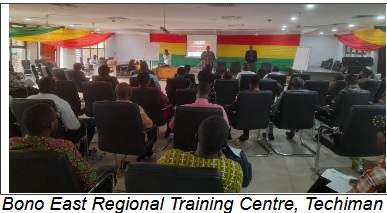
 As part of the interventions to help bridge the capacity gaps in administrative law and regulatory compliance as well as improve attitudes towards the performance of public service delivery of Local Government (LG) functionaries, professional staff and heads of basic service providers in the country, a two-day training programme has been organised by Institute of Local Government Studies (ILGS) in collaboration with the Ministry of Local Government, Chieftaincy and Religious Affairs (MLGCRA) and the Office of the Head of the Local Government Service (OHLGS).
The training programme was held between 15th and 16th December, 2025 across all 16 regional capitals of the country. It brought together targeted participants including Presiding Members (PMs); Administrative Officers (Deputy Directors); the District Directors of Education and Health; as well as the District Managers of the Electricity Company of Ghana and water services institutions namely, the Ghana Water Company and the Community Water and Sanitation Agency (CWSA) in the 261 MMDAs and 16 Regional Coordinating Councils (RCCs).
The course was intended to provide an opportunity for participants to reflect, deliberate, brainstorm and share experiences on their mandates and the legal provisions that enjoin them to perform within the confines of administrative law, which sets the rules and procedures on how local authorities make decisions, implement policies, and interact with citizens. Administrative law is therefore an area of law that deals with the rules that govern the interaction between the government and the governed. It seeks to provide adequate individual safeguards against governmental excesses or arbitrary intrusion when dealing with citizens or residents.
Local governance experts and legal practitioners within the local governance sector were deployed to facilitate the sessions, which covered seven modules namely; Introduction to Local Governance and Administrative Law; LG Mandatory Functions, Powers and Responsibilities; Rights, Entitlements and Duties of Citizens/ Residents and their Associations; The Exercise of Discretionary Power and the Legal Requirements; Legislative Oversight and Enforcement of Laws at the Local Level; Remedies for Public Administrative Lapses at the Local Level and Judicial Review and the Leadership Change-Making project that provides an opportunity to gauge progress of participants as part of the training impact assessments.
Notable among the concerns raised by participants during the open forum and presentations bothered on the revelations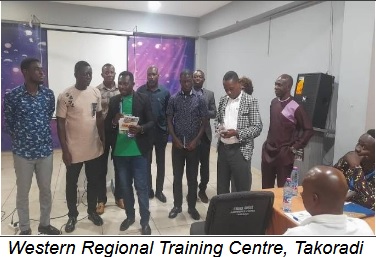 concerning breaches of several administrative law dictates in the performance of their duties and responsibilities and the urgent requirements to improve living conditions of residents in their areas of jurisdictions. Others included administrative lapses, citizens’ rights to redress and effective remedies to promote good governance at the local level.
Landmark cases involving review of decisions of administrative agencies and officials in the exercise of discretion power were also brought to the fore for further discussions.
At the end of the training, both organizers and participants had consensus on the need to uphold citizens’ rights, including human rights, participation rights, transparency and accountability in government operations, as well as the right to information. These were considered the surest way to improve working relationships with the local level actors for responsive, effective and efficient local governance and ensure effective service delivery, accountability, transparency, and the rule of law as well as well as the enforcement of human rights and privileges.
Overall, the training afforded participants an opportunity to build networks and share experiences for both their personal and professional development.