

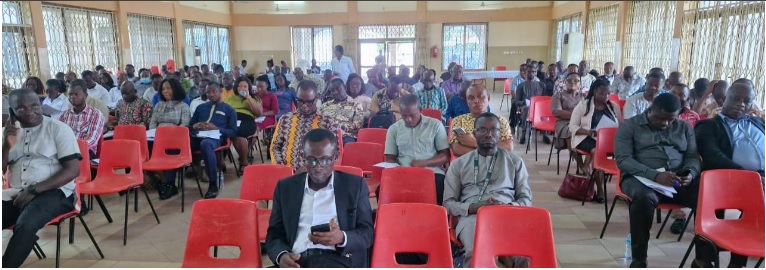
One Thousand One Hundred and Eight (1,108) Professional staff of Local Government (LG) authorities and 261 Metropolitan, Municipal and District Chief Executives (MMDCEs) in the country have benefited from a two-day training on Public Financial Management (PFM).
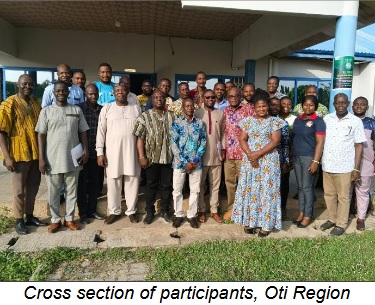 The Training programme was specifically designed in response to widespread breaches of basic PFM regulations and professional practice norms that were established in recent assessment of MMDAs under the DPAT. It was also intended to strengthen the competencies of MMDCEs, Regional/ District Coordinating Directors (RCDs/ DCDs), Budget Analysts, Finance Officers and Internal Auditors as part of the approved activities to be implemented by the Institute of Local Government Studies (ILGS) under the generic training component of the District Assemblies Common Fund Responsiveness Factor Grant (DACF-RFG).
The two-day training programme was therefore spearheaded by the Institute of Local Government Studies (ILGS), in collaboration with the Ministry of Local Government, Chieftaincy and Religious Affairs (MLGCRA) and the Office of the Head of the Local Government Service (OHLGS). The events took place nationwide from the 11th to 12th December, 2025 across all 16 regional capitals of the country.
The in-person training was to enable participants perform their respective roles and responsibilities effectively and efficiently at the local level and in compliance with the relevant PFM laws. Seasoned and experienced resource persons were drawn from the GIFMIS Secretariat of the Ministry of Finance, Ghana Audit Service, the Internal Audit Agency and the Public Procurement Authority to serve as resource persons. They took turns to make presentations and provided insights into a number of concepts and processes in seven (7) models namely: Overview of Fiscal Decentralisation and Rules Governing LG Financing; The Public Financial Management Cycle and the Roles of Duty Bearers, Offenses and Applicable Sanctions; The Ghana Integrated Financial Management System (GIFMIS) and Emerging Issues for Fiscal Governance; Public Procurement and Contracts Management at the Local Level; Internal Controls and Risks Management in MMDAs; Understanding Fiduciary Control and External Audit Requirements in the MMDAs and the Change-Making Project.
The sessions were delivered using a combination of flexible and experiential modes for teaching and learning. This was interspersed with mini case study assignments and analysis to engage and awaken participants to their envisaged roles and responsibilities at the local level as well as the requirements for ethical conduct and accountability in the use of public resources.
The hands-on training elicited thought-provoking questions, concerns and suggestions from diverse areas in relation to PFM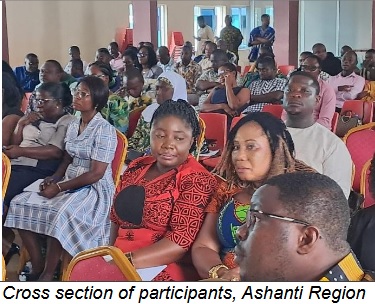 Practice and other related areas including, strengthening fiscal accountability, commitment authorisation, conduct of audit of payables, mandatory local procurement policy and the effective uses of the increased DACF transfers to MMDAs. The Composite Budgeting process, GIFMIS and issues in the area of IPSAS as well as other emerging requirements to curb the phenomena of misappropriations, mismanagement and misapplication of public funds, unaccounted for and unjustified payments.
It is worth pointing out that the target group at the end of the course demonstrated an increased level of understanding and gained broader perspectives as well as analytical rigor in the requirements for adhering to PFM principles and practices to enhance fiscal governance at the local level.
The training on Effective Public Financial Management Practices at the local level was the first in the series of nationwide generic competency-based training interventions aimed at strengthening capacities of staff and functionaries within the local governance sector.